Fazaaile-Durood: Contents Page
بِسْمِ
اللهِ
الرَّحْمَنِ
الرَّحِيْمِ
نَحْمَدُهُ وَنُصَلِّيْ عَلَى رَسُوْلِهِ الْكَرِيْمِ ، حَامِدًا وَّمُصَلِّيًا وَّمُسَلِّمًا ، اَلْحَمْدُ لِلهِ الَّذِي بِنِعْمَتِهِ تَتِمُّ الصَّالِحَاتُ وَالصَّلَوةُ وَالسَّلامُ عَلَى سَيِّدِ المَوْجُوْدَاتِ الَّذِي قَالَ أَنَا سَيِّدُ وُلْدِ آدَمَ وَلا فَخْرَ وَعَلَى آلِهِ وَأَصْحَابِهِ وَأَتْبَاعِهِ إِلَى يَوْمِ الْحَشْرِ ،
أَمَّا بَعْدُ
Through the benevolence and
favour of Allāh and solely by His grace, and through the affection of His
pious servants, this humble and sinful servant has written many books regarding
virtues [of certain actions], which have also been incorporated into the programme of the
tablīghī movement in Nizamuddin. Hundreds of letters from friends indicate
that they have proven very beneficial.
This sinful servant has no part
to play in this. Firstly, only by the grace of Allāh has it been possible.
Secondly, the blessings of the Prophetic sayings that have been translated in
these books and thirdly, the blessings of the pious elders upon whose order
these books have been written, has this book transpired. It is only through the
grace of Allāh that the defects of this sinful servant were not an
obstacle in the path of these blessings. O Allāh, all praise is due to You and all gratitude is due to You. O Allāh, I cannot
enumerate your praises. You are as You have praised
Yourself.
The first
book of this series, Virtues of the Qur’ān, was written in 1348 ah under the instruction of respected
Shāh Muḥammad Yāsīn Nagīnwī (may Allāh have
mercy on him), a representative (khalīfa) of Quṭb al-ʿĀlam,
shaykh of all shaykhs, Mawlānā Rashīd Aḥmad Gangohī (may
Allāh have mercy on him), as stated in detail in the preface to the book. Shāh Muḥammad
Yāsīn (may Allāh have mercy on him) passed away on the night of
Thursday 30th Shawwāl 1360 ah.
May Allāh illuminate his grave and elevate his ranks.
The Shaykh made a request at
the time of his death, conveyed to me through his eminent representative (khalīfa)
Mawlānā Al-Ḥāj ʿAbdul ʿAzīz Duʿājaw,
that a book regarding the virtues of blessings (ṣalāt) and salutations
(salām) should be written, in the same manner the Virtues of the
Qur’ān was written. After the demise of the Shaykh, Mawlānā ʿAbdul ʿAzīz
constantly reminded me and pressed upon me the need to fulfil this request and this
humble servant was desirous of attaining this great fortune too, despite his
shortcomings. Other elders besides Shāh Yāsīn (may Allāh
have mercy on him) were also insistent upon this. However, this humble servant was so overawed by the most glorious status of the Leader of
both worlds, Pride of the Prophets e, that whenever I intended to
write, I feared I might write something inappropriate to the lofty status of
the Messenger e.
Whilst still in this state of evasion,
I visited Ḥijāz last year upon the insistence of beloved
Mawlānā Muḥammad Yūsuf (may Allāh have mercy on him)
and by the grace of Allāh, I performed my fourth ḥajj. Upon arriving
in Madīna after completing the pilgrimage, it constantly crossed my mind
as to why I had not written regarding the virtues of ṣalāt. I
made excuses for myself on more than one occasion. However, this persistent
questioning of my heart led me resolve to complete this book upon my return,
Allāh willing.
However, “one of bad habits
makes many excuses” and so this task was evaded further
after my return. This desire has returned once again in this auspicious month
and so I finally begin writing on 25th Ramaḍān 1384 ah after the last Friday prayer of the month.
May Allāh, through His infinite grace, grant me the ability to complete
this book and out of His mercy, overlook all the shortcomings in this book, the
books I have previously written and my Arabic works.
I intend to compile this book
upon a few chapters, finishing with a conclusion. The first chapter will discuss
the virtues of ṣalāt and salām, the
second chapter will discuss the specific virtues of certain forms of ṣalāt
and salām, the third chapter will mention the warnings for not conferring
salutations and blessings upon the Prophet e, the fourth chapter will be on
miscellaneous points and the fifth chapter will consist of stories. May
Allāh grant people the ability to conferṣalātand salām abundantly. By reading this book, every reader
will realise how great a treasure ṣalāt and salām
is and how those who are negligent therein deprive themselves of such an immense
fortune.
CHAPTER ONE:
VIRTUES OF BLESSINGS AND SALUTATIONS
The most important and foremost
virtue is the command and order of Allāh Himself. Allāh says in the
Qur’ān:
(1)
إنَّ
اللهَ
وَمَلَئِكَتَهُ
يُصَلُّوْنَ
عَلَى
النَّبِيِّ
يَا أَيُّهَا
الَّذِيْنَ
آمَنُوْا
صَلُّوْا
عَلَيْهِ
وَسَلِّمُوْا
تَسْلِيْمًا
Verily, Allah and His angels confer blessings on the prophet:
O you who believe! Confer blessings on him, and greet him with a goodly
salutation. (Qur’ān 33:56)
Allāh has ordained many
different commands in the Qur’ān such as prayer (ṣalāh),
fasting, pilgrimage (ḥajj) etc. He has also described the noble
characteristics of many blessed Prophets and honoured them. After creating
Sayyidunā Ādam u, He ordered the angels to
prostrate towards him. However, nowhere has Allāh stated in any command or
in any honour that He is also a participant in this act and that the believers
should follow suit. This respect is solely for the Leader of both worlds, the
Pride of the World e. Allāh first attributes the act of conferring
ṣalāt towards Himself and after attributing it towards His angels,
finally orders the believers that they too should also confer ṣalāt
upon him.
What virtue could be greater than
Allāh and His angels also participating with the believers in this act?
Furthermore, those with knowledge of Arabic know that the verse begins with the
particle inna adding great emphasis to its meaning and the future and
present tenses have also been used, indicative of
continuity. In other words, it is most
certain that Allāh and His angels are constantly conferring blessings upon
the Noble Prophet e.
ʿAllāma
Sakhāwī (may Allāh have mercy on him) writes, “The verse, being
in the present and future tenses which denote continuity and permanence, establishes
that Allāh and His angels are always conferring blessings upon the Noble
Prophet e.”
The author of Rūḥ
al-Bayān writes, “Some scholars have written that the meaning of
Allāh conferring His blessings is raising the Noble Prophet e to the Praised Station (Al-Maqām
al-Maḥmūd), which is the station of intercession, and the ṣalāt
of the angels is praying for the Noble Prophet’s e status to be elevated and
seeking forgiveness for the Noble Prophet’s e followers. The meaning of the
believers conferring blessings is following the Noble Prophet e, having love for him and
mentioning his beautiful qualities. This honour granted by Allāh to the
Noble Prophet e is
much greater than the respect shown to Sayyidunā Ādam
u by
means of ordering the angels to prostrate before him, because Allāh
Himself is engaged in this honour of the Noble Prophet e, whereas only the angels were
ordered to prostrate before Sayyidunā Ādam u.”
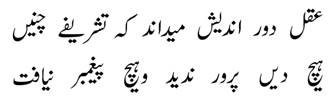
The intelligent will realize that such an honour has been bestowed upon neither any other Prophet, nor his
followers.
يُصَلِّي عَلَيْهِ اللهُ جَلَّ جَلالُهُ بِهَذَا بَدَا لِلْعَالَمِيْنَ كَمَالُهُ
Allāh the Exalted confers blessings upon him. Thereby, his excellence
is manifest to all the creation.
The scholars have noted that
the Noble Prophet e is being addressed with nabī
in this verse rather than with his name Muḥammad e, as in the case of other
Prophets who have been mentioned by name. This is out of paramount respect and
esteem of the Noble Prophet e. In one place where the Noble Prophet e and Sayyidunā
Ibrāhīm u have been mentioned together, the Noble
Prophet e is
mentioned by nabī and Sayyidunā Ibrāhīm u is mentioned by name.
Allāh says,
إِنَّ
أَوْلَى
النَّاسِ
بِإِبْرَاهِيْمَ
لَلَّذِيْنَ
اتَّبَعُوْهُ
وَهَذَا النَّبِيُّ
وَالَّذِيْنَ
آمَنُوْا
وَاللَّهُ
وَلِيُّ
الْمُؤْمِنِيْنَ
Surely the nearest of mankind to Ibrāhīm are those who followed him
and this Prophet and those who believe. And Allāh
is the patron of the believers. (Āl ʿImrān 3:68)
Wherever the Noble Prophet e has been
mentioned by name, it is for a specific reason. ʿAllāma
Sakhāwī (may Allāh have
mercy on him) has discussed this point in detail.
It is worth noting at this
point that the word ṣalāt which has been
attributed towards Allāh, His angels and the believers simultaneously
is a synonymous word with many different meanings and used for various
purposes, as already mentioned by the author of Rūḥ al-Bayān.
The scholars have expounded
many meanings for the word ṣalāt in this verse, and in each place
the most appropriate meaning in relation to Allāh, His angels and the
believers will be meant. Some scholars have written
that ṣalāt upon the Prophet e means praise and respect of
the Noble Prophet e with mercy and affection. Furthermore, this praise and respect
will be according to the rank and status of whoever
the act of conferring ṣalāt is attributed to. For example, it is said that the father is kind to his son and that the son
is kind to his father, or that the brothers are kind to one another. Now it is
obvious that the kindness shown by the father to his son will differ to that
shown by the son to his father and that of the brothers to one another.
Likewise, Allāh’s
conferring ṣalāt upon the Noble Prophet e means Allāh is praising
and honouring him with mercy and kindness. The angels are also conferring ṣalāt
but their ṣalāt, blessings and respect will be according to their
own position. Thereafter, the believers are ordered to
confer blessings [which is also in accordance to their own status].
Imām Bukhārī (may Allāh have mercy on him) has
narrated from Abū ʿĀliya (may
Allāh have mercy on him) that the meaning of Allāh conferring ṣalāt
is to praise the Noble Prophet e in the presence of the angels and the
blessings of the angels are their prayers. Sayyidunā Ibn ʿAbbās y has interpreted yuṣallūna
[in the verse] as yubarrikūna, meaning they pray for blessings.
Ḥāfiẓ Ibn
Ḥajar (may Allāh have mercy
on him) states that this meaning complies with Abū ʿĀliya’s
opinion, except it is more specific in context. Elsewhere, after mentioning the
various meanings of ṣalāt, he mentions that Abū ʿĀliya’s
(may Allāh have mercy on him)
opinion is the most preferred, namely that Allāh’s ṣalāt is
praising the Noble Prophet e and that the ṣalāt of the
angels and others is requesting Allāh to confer ṣalāt.
Furthermore, this request is for an increase in the blessings already being conferred, not for the conferring of blessings to be
initiated.
It is mentioned in a narration
that when this verse was revealed, the Companions y said, “O Messenger of
Allāh e, we
know how to convey salām (the salām in the al-taḥiyyāt
[in the five daily prayers]: As-salāmu ʿalayka ayyuhan nabiyyu wa
raḥmatullāhi wa barakātuhu). Teach us how to confer ṣalāt.”
The Noble Prophet e then taught the following: Allāhumma
ṣalli ʿalā Muḥammadin wa ʿalā
āli Muḥammad.
(This will be discussed in
detail under the first ḥadīth of Chapter Two).
Allāh ordered the
believers to confer ṣalāt upon the Noble Prophet e. The Noble Prophet e taught the method thereto;
request Allāh to eternally confer his infinite
mercies upon him, for the blessings and mercies of Allāh are boundless.
This is also from the mercy of Allāh that the further blessings he confers
upon the Noble Prophet e due to our request are
attributed to us, as though we had conferred them, when in reality
Allāh alone is conferring ṣalāt. Who possibly had the ability
to present the Noble Prophet e with the gift of blessings, befitting his
lofty status?
Shāh ʿAbdul
Qādir (may Allāh have mercy
on him) writes, “Requesting Allāh to shower His mercy and blessings
upon His Noble Prophet e and his household is a great act of
virtue. Mercy befitting the Noble Prophet’s e descends upon him and by conferring
once, tenfold blessings are conferred upon the suppliant.
It is now the choice of the suppliant how much he wishes to acquire.” (The ḥadīth
Shāh ʿAbdul Qādir (may
Allāh have mercy on him) is referring to will be mentioned under ḥadīth
three).
We also understand from this that
the objection some ignorant people raise that the verse is ordering the
believers to confer blessings upon the Noble Prophet e, whilst the believers say, “O
Allāh, confer blessings upon the Noble Prophet e,” is ridiculous. [Their
objection is that] the very action Allāh ordained upon the
believers was returned by the believers to Allāh.
Firstly, when the Companions y asked the Noble Prophet e how to implement the
Qur’ānic order after this verse was revealed, this
was the method taught by the Noble Prophet e, as mentioned above. Secondly,
our requesting Allāh to confer His choicest blessings is much greater than
anything we could present to the Noble Prophet e on our own part.
ʿAllāma
Sakhāwī (may Allāh have
mercy on him) writes in Al-Qawl al-Badīʿ, “It is
written in the book of Amīr Muṣṭafā Turkamānī
Ḥanafī (may Allāh have
mercy on him) that if one asks what wisdom is there in Allāh ordering
us to confer ṣalāt when we counter this order by saying, ‘O
Allāh, confer ṣalāt upon Muḥammad e,’ asking Allāh instead to
confer His ṣalāt (In ṣalāh we say, ‘O Allāh
confer blessings upon Muḥammad’, instead of ‘I confer blessings upon Muḥammad’),
the answer is that the Noble Prophet e is faultless. On the contrary, we are full
of faults and defects from head to toe. So how is it possible for one full of
defects to rightfully praise he who is pure from all
blemishes? Hence, we request Almighty Allāh that He personally confers ṣalāt
upon the Noble Prophet e, so that the ṣalāt upon our
pure Prophet e
emanates from the Lord most pure.”
Likewise, it is narrated from ʿAllāma
Nayshāpūrī (may
Allāh have mercy on him) in his book Al-Laṭā’if wa al-Ḥikam that a person should not say
“I confer blessings upon Muḥammad” in his ṣalāh, as the
person is not worthy of this. Instead, he should request his Lord to confer
blessings upon the Noble Prophet e, in which case, Allāh is in reality conferring
blessings upon the Noble Prophet e and allegorically, it is
attributed towards us as a supplication.
Ibn Abī Ḥajalah (may Allāh have mercy on him)
also mentions something to the same effect. He says that when Allāh
ordered us to confer blessings but our blessings could not reach the due right,
we made this request to Allāh; He alone truly knows what befits the status
of the Prophet e. This is the same as in the supplication of the Noble Prophet e: “O Allāh, I cannot fully
praise You. You are as You
have praised Yourself.”
ʿAllāma
Sakhāwī (may Allāh have
mercy on him) says, “Once this point has been established, one’s ṣalāt
upon the Noble Prophet e should be conferred in the manner taught
to us by the Noble Prophet e. This is how one’s ranks will be
elevated. Confer blessings abundantly, giving this act its due importance and
with steadfastness, for an abundance of ṣalāt is from amongst the
signs of love for the Noble Prophet e. Whoever loves something mentions it
frequently.”
ʿAllāma
Sakhāwī (may Allāh have
mercy on him) has also narrated from Imām Zayn al-ʿĀbidīn
(may Allāh have mercy on him)
that conferring ṣalāt upon the Noble Prophet e abundantly is a sign of the People
of Sunna (ahl al-sunna).
ʿAllāma Zurqānī
(may Allāh have mercy on him)
writes in Sharḥ al-Mawāhib, “The purpose of conferring ṣalāt
is to gain proximity with Allāh by obeying His order, and to fulfil a
portion of the rights of the Noble Prophet e binding upon us.”
Ḥāfiẓ ʿIzzuddin
Ibn ʿAbdus Salām (may
Allāh have mercy on him) says, “Our conferring of ṣalāt
is not an intercession for the Noble Prophet e, for how can we possibly
intercede on his behalf? The fact is that Allāh has ordered us to repay a
benefactor for his favours, and there is no greater benefactor than our beloved
Prophet e. As
we were incapable of repaying the Noble Prophet e for his favours, Allāh
pitied our weakness and taught us how to repay the Noble Prophet e by ordaining the conferring of
ṣalāt. Since we were incompetent of this too, we beseeched
Allāh that He Himself should reward the Noble Prophet e in a manner that befits His
majesty.”
The aforementioned verse of the
Qur’ān orders the believers to confer ṣalāt, whereby the
scholars have deemed the conferring of ṣalāt to be
compulsory.
(This will be discussed in
detail in Chapter Four under the first point).
ʿAllāma
Rāzī (may Allāh have
mercy on him), in his Al-Tafsīr al-Kabīr, has discussed
an objection which may arise at this point; When Allāh and His angels
confer ṣalāt upon the Noble Prophet e, what need is there for us to do
so? The answer to this is that our conferring of ṣalāt upon the
Noble Prophet e is
not because he is in need of it in any way. If this were the case, then the
angels would not need to confer ṣalāt after Allāh had conferred
it. Our conferring of ṣalāt is rather an expression of reverence for
the Noble Prophet e. Similarly, Allāh has commanded the believers to remember
Him, when Allāh is in no need of this remembrance.
Ḥāfiẓ Ibn
Ḥajar (may Allāh have mercy
on him) has written that some people questioned him as to why the word ṣalāt
has been attributed to Allāh in the Qur’ānic verse and not the word salām. He replied that it maybe because salām has two meanings: (i) supplication (ii) to follow
and obey. Both meanings are correct with respect to the believers, and thus
they have been given this order. However, the latter
meaning is improper with respect to Allāh and His angels and for this reason, salām has not been attributed to them.
ʿAllāma
Sakhāwī (may Allāh have
mercy on him) has mentioned a very frightening incident regarding this
verse. He narrates that Aḥmad Yamāni (may Allāh have mercy on him) said, “I was in Sanʿā.
I saw that a large gathering was surrounding a person. Upon enquiring, people
told me that this person used to recite the Qur’ān in a most melodious
voice. When he came to the verse yuṣallūna ʿala ’l-nabiyy,
he read yuṣallūna ʿalā ʿaliyy ’l-nabiyy, which
means Allāh and His angels confer blessings upon ʿAlī t, the prophet. (This person was
most probably a rāfiḍī) [members of a sect which insults the Companions y and excessively praises Sayyidunā
ʿAlī t]. No sooner had he read this that he became dumb, was struck with
leprosy and was left blind and paralysed.”
This story contains a severe
warning. May Allāh protect us from disrespecting Him, His Holy Book and
His Noble Prophets. Out of our ignorance and disregard,
we are oblivious to what we utter. May Allāh save us from His wrath.
(2)
قُلِ الْحَمْدُ
لِلهِ
وَسَلاَمٌ
عَلَى
عِبَادِهِ الَّذِيْنَ
اصْطَفَى
Say: Praise be to Allah, and peace on His servants whom He has chosen
(for His Message). (Qur’ān 27:59)
The scholars have written that
this verse is like a sermon for the subject that follows. In this verse, the
Noble Prophet e has been ordered to praise Allāh and confer salutations
upon His chosen people.
Ḥāfiẓ Ibn
Kathīr (may Allāh have mercy
on him) writes in his Qur’ānic exegesis that Allāh has
commanded His Prophet e to confer salām
upon His chosen servants. They are His Messengers and Prophets (may
Allāh’s peace and blessings be upon them), as narrated on the authority of
ʿAbdurraḥmān bin Zayd bin Aslam that “His chosen servants” are
the Prophets, as substantiated by the Qur’ānic verses:
سُبْحَانَ
رَبِّكَ
رَبِّ
الْعِزَّةِ
عَمَّا
يَصِفُوْنَ ,
وَسَلاَمٌ
عَلَى
الْمُرْسَلِيْنَ
,
وَالْحَمْدُ
لِلَّهِ
رَبِّ
الْعَلَمِيْنَ
Glorified be your Lord, the
Lord of Majesty, from what they associate to Him. And
peace be upon the sent ones. And all praise to
Allāh, Lord of the worlds. (Al-Ṣāffāt 37: 180-182)
Imām Sufyān
Thawrī, Suddī and others say it refers to the Companions y and this has
also been narrated on the authority of Sayyidunā Ibn ʿAbbās
y.
There is no discrepancy between these two viewpoints, because the Noble
Prophets (ʿalayhimus salām)
will most definitely be included if the Companions y are intended.
(3)
عَنْ أَبِي
هُرَيْرَةَ t أَنَّ
رَسُوْلَ
اللهِe
قاَلَ مَنْ
صَلَّى
عَلَيَّ
صَلَوةً
وَاحِدَةً
صَلَّى اللهُ
عَلَيهِ
عَشْرًا
رواه مسلم
وابوداؤد
وابن حبان في
صحيحه وغيرهم
كذا في الترغيب
Sayyidunā Abū Hurayra t that the Messenger of
Allāh e said, “Whoever confers one blessing
upon me, Allāh confers ten blessings upon him.”
One blessing and mercy from
Allāh is sufficient for the whole world, let alone ten blessings in return
for conferring ṣalāt once. What could be a greater virtue of ṣalāt
that one is granted ten blessings from Allāh for
conferring one blessing? How fortunate are those elders who confer one hundred
and twenty five thousand blessings upon the Noble Prophet e on a daily basis, just as I
have heard regarding some of the elders of my family.
ʿAllāma
Sakhāwī (may Allāh have
mercy on him) has narrated on the authority of Sayyidunā ʿĀmir
bin Rabīʿa t that the Noble Prophet e said, “Whoever confers ṣalāt
upon me once, Allāh confers ten mercies upon him. It is at your discretion
to confer as little or as much as you wish.” A ḥadīth to the same
effect has been narrated on the authority of
Sayyidunā ʿAbdullāh bin ʿAmr y, with the addition that
Allāh and His angels confer ten blessings.
ʿAllāma
Sakhāwī (may Allāh have
mercy on him) has narrated ḥadīths of the same subject on the
authority of a number of Companions y. Elsewhere, he writes, “In the same
manner Allāh has mentioned the Prophet’s e name alongside His own name in
the declaration of faith (shahāda), and stated obedience and love
of the Noble Prophet e to be His obedience and love, He has also
coupled conferring blessings upon him e with His own blessings upon him. Thus, just
as Allāh has said, ‘Remember me, I shall remember you’, with regards to ṣalāt
upon the Noble Prophet e, the person who confers one blessing upon
the Prophet e,
Allāh in return confers ten blessings.”
In Al-Targhīb, it is narrated on the authority of Sayyidunā ʿAbdullāh
bin ʿAmr y
that whoever confers ṣalāt upon the Noble Prophet e once, Allāh and His
angels confer seventy blessings upon him.
One should
understand at this point that if differing amounts of reward are mentioned for
a particular deed (eg. ten rewards are promised in one ḥadīth and
seventy in another), some scholars are of the opinion that because Allāh’s
favours on the followers of Muḥammad e increased on a daily basis, the narrations
which mention greater reward are the latter ḥadīths. Thus, it
is as though Allāh initially promised ten rewards and then increased this
to seventy. Other scholars have interpreted this difference with respect to to
various people, times and conditions. (This topic has already been discussed in
the Virtues of Ṣalāh under the difference narrated in the
reward of twenty five or twenty seven for
congregational ṣalāh). Regarding the ḥadīth which
mentions seventyfold reward, Mullā ʿAlī Qārī (may Allāh have mercy on him)
writes that this maybe specific to conferring blessings on Friday, because in
another ḥadīth it is narrated that the reward for good deeds
increases seventyfold on Friday.
(4)
عَنْ أَنَسٍ
t أَنَّ
النَّبِيَّ eقَالَ
مَنْ
ذُكِرْتُ
عِنْدَهُ
فَلْيُصَلِّ
عَلَيَّ
وَمَنْ
صَلَّى
عَلَيَّ
مَرَّةً صَلَّى
اللهُ
عَلَيْهِ
عَشْرًا وفي
رواية
مَنْ صَلَّى
عَلَيَّ
صَلَوةً
وَاحِدَةً
صَلَّى اللهُ
عَلَيْهِ
عَشْرَ
صَلَوَاتٍ
وَّحَطَّ عَنْهُ
عَشْرَ
سَيِّئَاتٍ
وَّرَفَعَهُ
بِهَا عَشْرَ
دَرَجَاتٍ
رواه أحمد
والنسائي
واللفظ له
وابن حبان في
صحيحه كذا في
الترغيب
Sayyidunā Anas t narrates that the Noble
Prophet e said, “The person in whose presence I am
mentioned should confer blessings upon me. Whoever confers blessings upon me
once, Allāh confers ten blessings upon him.” In one narration, the Noble
Prophet e said, “Whoever confers one blessing
upon me, Allāh confers ten blessings upon him,
forgives ten of his sins and elevates his status tenfold.”
ʿAllāma Mundhirī
(may Allāh have mercy on him)
has also narrated a similar ḥadīth on the authority of
Sayyidunā Barā t in Al-Targhīb with the
addition that the suppliant receives the reward of freeing ten slaves. In a ḥadīth
recorded by Ṭabrāni, it is narrated, “Whoever confers one blessing
upon me, Allāh confers ten blessings upon him. Whoever confers ten
blessings upon me, Allāh confers one hundred blessings upon him. Whoever
confers one hundred blessings upon me, Allāh writes ‘Freedom from
hypocrisy and freedom from the Hellfire’ on the suppliant’s forehead. On the
Day of Judgement, this person will be resurrected with the martyrs.”
ʿAllāma
Sakhāwī (may Allāh have
mercy on him) has narrated on the authority of Sayyidunā Abū Hurayra
t that
the Noble Prophet e said, “Whoever confers ten blessings upon me, Allāh will
confer one hundred blessings upon him. Whoever confers one hundred blessings upon
me, Allāh will confer one thousand blessings upon him, and whoever confers
more due to love and devotion, I shall intercede for him on the Day of
Judgement and be a witness for him.”
This has also
been narrated on the authority of Sayyidunā ʿAbdurraḥmān
bin ʿAwf t with
different wording. He says, “From amongst four or five of us, at least one of
us would always remain with the Noble Prophet e to attend to his needs. One
day the Noble Prophet e went into a garden and I followed him.
The Noble Prophet e performe ṣalāh therein and prostrated for such a long
time that I feared the Noble Prophet e had passed away. I began crying due to
this fear and went close to the Noble Prophet e to observe him. After the
Noble Prophet e
arose from prostration, he asked, ‘O ʿAbdurraḥmān, what is the
matter?’
I replied, ‘O Messenger of
Allāh, you performed such a long prostration that I feared you had passed
away.’
The Noble Prophet e replied, ‘Allāh has
bestowed a favour upon me with regards to my followers. In gratitude for this
favour, I prostrated for so long. Allāh has informed me that whoever
confers one blessing upon me, He will record ten good deeds for him and forgive
ten of his sins.’”
In a narration of the same
incident, the Noble Prophet e asked, “O ʿAbdurraḥmān,
what is the matter?” Sayyidunā ʿAbdurraḥmān
t expressed his fear.
The Noble Prophet e replied, “Jibrīl u came to me a short while ago
and said, ‘Would it not please you that Allāh has said that whoever
confers blessings upon you, Allāh will confer blessings upon him and
whoever confers salutations upon you, Allāh shall confer salutations upon
him?’” (Al-Targhīb)
ʿAllāma
Sakhāwī (may Allāh have
mercy on him) has also narrated a similar ḥadīth on the
authority of Sayyidunā ʿUmar t.
Sayyidunā
Abū Ṭalḥa Anṣārī t narrates, “Once the Noble
Prophet e
came to us and he was extremely happy.
The Companions y said, ‘O Messenger of
Allāh, we see that you are very happy today.’
The Noble Prophet e replied, ‘Yes, indeed. I have
received a message from my Lord. Allāh has said that whoever from amongst
my followers confers one blessing upon me, Allāh shall record ten good
deeds for him, forgive ten of his sins and raise his status tenfold.’”
In another narration of the
same incident it is narrated, “Whoever from amongst your followers confers one blessing, I shall confer ten blessings upon him. Whoever
confers salutations once, I shall confer salutations upon him ten times.”
Another narration of the same
incident says, “One day the Noble Prophet’s e blessed face was radiant with
happiness and his pleasure was quite noticeable.
The Companions y said, ‘O Messenger of
Allāh, the happiness apparent on your face today has never been seen
before.’
The Noble Prophet e replied, ‘Why should it not be
so? A few moments earlier, Jibrīl u came to me and informed me,
‘Whoever from amongst your followers confers one blessing upon you, Allāh
in return will write ten good deeds in his book of deeds, forgive ten of his
sins, raise his status tenfold and an angel shall repeat to him what he said.’’
The Noble Prophet e said, ‘I asked Jibrīl u regarding this angel.’
Jibrīl u replied, “Allāh has
appointed an angel until the Day of Judgement whose duty it is to pray for
whoever confers blessings upon you by saying ‘May Allāh confer blessings
upon you too.’” (Al-Targhīb)
ʿAllāma
Sakhāwī (may Allāh have
mercy on him) has questioned that when according to the Qur’ānic
verse ‘Whosoever will come with a virtue, for him
there shall be ten like thereof’ (Al-Ancām 6:160) the
reward of every good deed is tenfold, what then is the special virtue of ṣalāt?
According to this humble
servant, the answer is quite simple; the ten deeds received as promised by the
Qur’ānic verse are separate to the ten blessings from Allāh as an an
additional favour. ʿAllāma Sakhāwī (may Allāh have mercy on him) has answered his own question
by saying that Allāh’s ten blessings upon the suppliant are much greater
than the ten blessings the suppliant conferred upon the Noble Prophet e. Furthermore, one’s status
being elevated tenfold, forgiveness of ten sins, ten good deeds in the book of
good deeds and the reward equivalent to that of freeing ten slaves are all
additional rewards.
Ḥakīm
al-Umma Shaykh Ashraf ʿAlī Thānawī (may Allāh have mercy on him) has written in Zād al-Saʿīd,
“In the same way we understand from the explicit wording of the ḥadīth
that by conferring one blessing ten mercies are revealed, the Qur’ān
indicates that disregarding the most lofty status of the Noble Prophet e (We seek Allāh’s
protection therefrom) earns a person ten curses from Allāh. Thus,
Allāh said the following ten words regarding Walīd bin Mughīra
in punishment for his mockery; Ḥallāf (swearer), mahīn
(dishonourable), hammāz (defamer), masshā’in bi namīm (spreader
of slander), mannāʿil lil khayr (hinderer of
good), muʿtad (trespasser), athīm (sinner), ʿutull
(gross), zanīm (ignoble), mukadhib lil āyāt (belier of the
Qur’ānic verses) (The latter meaning ‘belier of the Qur’ānic
verses’ is understood from the following words: And thus, because he is owner
of riches and children, when Our revelations are rehearsed to him he says,
“Fables of the ancient”).
The ten words which Ḥakīm
al-Umma Shaykh Ashraf ʿAlī Thānawī (may Allāh have mercy on him) has mentioned are all in Surah
Nūn of the twenty ninth juz of the
Qur’ān:
وَلاَ
تُطِعْ كُلَّ
حَلاَّفٍ
مَهِيْنٍ هَمَّازٍ
مَّشَّاءٍ
بِنَمِيْمٍ
مَّنَّاعٍ لِلْخَيْرِ
مُعْتَدٍ
أَثِيْمٍ
عُتُلٍّ بَعْدَ
ذَلِكَ
زَنِيْمٍ
أَنْ كَانَ
ذَا مَالٍ وَّبَنِيْنَ
إِذَا
تُتْلَى
عَلَيْهِ
آيَتُنَا
قَالَ
أَسَاطِيْرُ
الأَوَّلِيْنَ
And do not obey any dishonourable
swearer, defamer, spreader abroad of slander, hinderer of the good, trespasser,
sinner. Gross and moreover ignoble, and thus, because
he is owner of riches and children, when Our revelations are rehearsed to him
he says, “Fables of the ancient.” (Al-Qalam 68:10-15)
(5)
عَنِ ابْنِ
مَسْعُوْدٍ tقَالَ
قَالَ
رَسُوْلُ
اللهِ eإِنَّ
أَوْلَى
النَّاسِ
بِيْ يَوْمَ
الْقِيَامَةِ
أَكْثَرُهُمْ
عَلَيَّ
صَلَوةً
رواه
الترمذي وابن
حبان في صحيحه
كلاهما من رواية
موسى بن يعقوب
كذا في الترغيب
وبسط السخاوي
في القول
البديع الكلام
على تخريجه
Sayyidunā ʿAbdullāh
ibn Masʿūd t narrates that the
Messenger of Allāh e said, “Indeed, those closest to me
on the Day of Judgement will be those who confer blessings upon me the most.”
ʿAllāma Sakhāwī (may Allāh have mercy on him) narrates in Al-Qawl
al-Badīʿʿ from Al-Durr al-Munaẓẓam
that the Noble Prophet e said, “He who confers blessings upon
abundantly from amongst you will be the closest to me on the Day of Judgement.”
In a ḥadīth of
Sayyidunā Anas t, it is narrated that at every stage on
the Day of Judgement, the closest person to the Noble Prophet e shall be that person who
confers the most blessings upon him.
(This topic will
be discussed in Chapter two under the third ḥadīth).
It has also
been narrated that the Noble Prophet e said, “Confer blessings upon
me abundantly, for you shall first be questioned regarding me in the grave.”
In another ḥadīth,
it is narrated, “Conferring blessings upon me shall be a source of light on the
Day of Judgement in the darkness of the Bridge. Whoever wishes for his deeds to
be weighed in a very large scale should abundantly confer blessings upon me.” A
ḥadīth on the authority of Sayyidunā Anas t narrates that the person most
protected from the horrors of the Day of Judgement and the various stages
therein will be the person who confers the most blessings upon the Noble
Prophet e in
this life.
In Zād
al-Saʿīd, it is narrated on the
authority of Sayyidunā Anas t that the Noble Prophet e said, “Whoever confers blessings
upon me abundantly shall be in the shade of the Throne.”
ʿAllāma
Sakhāwī (may Allāh have
mercy on him) narrates a ḥadīth of the Noble Prophet e wherein three people are
promised the shade of Allāh’s Throne on the Day of Judgement, the day on
which there will be no shade except for His shade. The first is the person who
removes a difficulty from a person in affliction. The second is he who revives
a practice of the Noble Prophet e. The third is the person who
abundantly confers blessings upon the Prophet e.
In another ḥadīth, ʿAllāma
Sakhāwī (may Allāh have
mercy on him) narrates on the authority of Sayyidunā ʿUmar t that the Noble Prophet e said, “Beautify your
gatherings with ṣalāt, for conferring blessings upon
me shall be a light for you on the Day of Judgement.”
Allāma Sakhāwī (may Allāh have mercy on him)
narrates from Qūt al-Qulūb that conferring in abundance means
at least three hundred times. The exalted Mawlānā Rashīd Aḥmad Gangawhī
(may Allāh have mercy on him)
would also instruct his disciples to confer blessings at least three hundred
times, as we shall mention in Chapter Three under the
third ḥadīth.
Under the abovementioned
ḥadīth, ʿAllāma Sakhāwī (may Allāh have mercy on him) writes that Ibn Ḥibbān
(may Allāh have mercy on him)
has mentioned in his Ṣaḥīḥ that this ḥadīth
is evident proof that those closest to the Noble Prophet e on the Day of Judgement will
be the ḥadīth scholars (muḥaddithūn), since they
confer the most blessings.
Abū ʿUbaydah (may Allāh have mercy on him) has
also said that this virtue is reserved for the ḥadīth scholars.
The reason for this is that when they narrate or write ḥadīths, they
always confer blessings with the Noble Prophet’s e auspicious name.
Khaṭīb (may Allāh have mercy on him) has
also narrated from Abū Nuʿaym (may
Allāh have mercy on him) that this virtue is specifically for the ḥadīth
scholars. The scholars have written that the reason behind this is that whilst
reading, writing or narrating ḥadīths, they have the opportunity to
confer or write blessings with the auspicious name of the Noble Prophet e abundantly. Muḥaddithūn
does not only mean the imāms of ḥadīth, but rather it includes
all who study or teach the books of ḥadīth, irrespective of whether
these books are in Arabic or Urdu [or any other language].
In Zād
al-Saʿīd, it is mentioned that Ṭabrāni
has narrated that the Noble Prophet e said, “Whoever confers blessings upon me
in a book (i.e. in writing), the angels shall continue conferring blessings
upon him as long as my name remains in this book.” Ṭabrāni also
narrates that the Noble Prophet e said, “Whoever confers ten blessings upon
me in the morning and ten blessings in the evening shall be blessed with my
intercession on the Day of Judgement.”
It is narrated from Imām
Mustaghfirī (may Allāh have
mercy on him) that the Noble Prophet e said, “The person who confers
one hundred blessings upon me daily, one hundred of his needs shall be
fulfilled; thirty in this world and the rest in the Hereafter.”
(6)
عَنِ ابْنِ
مَسْعُوْدٍ t عَنِ
النَّبِيِّ e
قَالَ إِنَّ لِلهِ
مَلا!ئِكَةً
سَيَّاحِيْنَ
يُبَلِّغُوْنِيْ
عَنْ
أُمَّتِيَ
السَّلامَ
رواه
النسائي وابن
حبان في صحيحه
كذا في الترغيب
زاد في القول
البديع أحمد
والحاكم
وغيرهما وقال
الحاكم صحيح
الإسناد
Sayyidunā ʿAbdullāh bin
Masʿūd t narrates that the Noble
Prophet e said, “Allāh has certain angels
who roam the earth and convey the salutations of my followers to me.”
This has also
been narrated on the authority of many other Companions y. ʿAllāma
Sakhāwī (may Allāh have mercy on him) has narrated on the
authority of Sayyidunā ʿAlī t that some of the angels of
Allāh travel the Earth and convey the blessings of the Noble Prophet’s e followers to him.
In Al-Targhīb, a ḥadīth
is narrated on the authority of Sayyidunā Ḥasan
t that
the Noble Prophet e said, “Confer blessings upon me wherever you are. Indeed, your
blessings reach me.” On the authority of Sayyidunā Anas t the Noble Prophet e is reported to have said, “Whoever
confers blessings upon me, then indeed these blessings reach me and in return,
I confer blessings upon that person. Furthermore, ten good deeds are
written for him.”
In Mishkāt al-Maṣābīḥ it is narrated on the
authority of Sayyidunā Abū Hurayra t that the Noble Prophet e said, “Confer blessings upon
me, as your blessings reach me.”
(7)
عَنْ
عَمَّارٍ
بْنِ يَاسِرٍ y
قَالَ قَالَ
رَسُوْلُ
اللهِ e
إِنَّ
اللَّهَ
وَكَّلَ
بِقَبْرِيْ
مَلَكًا
أَعْطَاهُ
أَسْمَاعَ
الْخَلاَئِقِ
فَلاَ
يُصَلِّيْ
عَلَيَّ
أَحَدٌ إِلَى
يَوْمِ الْقِيَامَةِ
إِلاَّ
أَبْلَغَنِيْ
بِاسْمِهِ
وَاسْمِ
أَبِيْهِ
هَذَا فُلانٌ
بْنُ فُلانٍ
قَدْ صَلَّى
عَلَيْكَ
رواه البزار
كذا في
الترغيب وذكر
تخريجه السخاوي
في القول
البديع
Sayyidunā ʿAmmār
ibn Yāsir y narrates that the Messenger of
Allāh e said, “Verily, Allāh has
appointed an angel at my grave to whom he has granted the ability to hear the
whole creation. Thus, until the Day of Judgment there is no person who confers
blessings upon me except that this angel conveys to me the blessings of this
person with his name and his father’s name, saying, ‘The
son of so-and-so person has conferred blessings upon you.’”
Allāma Sakhāwī (may Allāh have mercy on him) has
also narrated this ḥadīth in Al-Qawl al-Badīʿʿ
with the addition, “Such and such a person who is the son of such and such has
conferred blessings upon you.” The Noble Prophet e then said, “In reward for every
blessing, Allāh confers ten mercies upon him.”
Another ḥadīth
narrates something similar; Allāh has granted one of the angels the power
to hear the speech of the whole creation. This angel will remain at the Noble
Prophet’s e
grave until the Day of Judgement and whenever someone confers blessings upon
the Noble Prophet e, the angel mentions that person by his name and his father’s name
and informs the Noble Prophet e that this person has conferred blessings
upon him. Allāh has promised the Noble Prophet e that He shall confer ten
blessings upon the person who confers one blessing upon him.
In another ḥadīth
wherein this angel is mentioned, the Noble Prophet e is reported to have said, “I
requested my Lord to confer ten blessings upon whoever confers one blessing
upon me. Allāh accepted my request.”
It is also
narrated on the authority of Sayyidunā Abū Umāma t that the Noble Prophet e said, “Allāh confers ten
blessings upon the person who confers one blessing upon me. An angel is
assigned to this blessing who then conveys it to me.”
The Noble Prophet e said is
reported to have said on the authority of Sayyidunā Anas t, “Whoever confers blessings
upon me on the day or night of Friday, Allāh will fulfil one hundred of
his needs, and appoint an angel to convey it to me in my grave, just as you
present gifts to one another.”
No objection should arise as to
why this ḥadīth indicates that only one angel is appointed upon the
Noble Prophet’s e blessed grave to convey everyone’s blessings and salutations to
him, whereas the previous ḥadīth stated that there are many angels
of Allāh who travel the Earth to convey the salutations of the Noble
Prophet‘s e
followers. The angel appointed at the blessed grave has the sole duty of
conveying the salutations of the Noble Prophet’s e followers, and the angels who travel
the Earth search for the gatherings of remembrance and wherever they come
across blessings upon the Noble Prophet e, they then convey these
blessings to him.
It is common knowledge that if
a message is sent to a senior (pious person) and this
message is mentioned in a gathering, each person present considers it a
privilege and honour that he should convey this message. I have witnessed this
many a time in the gatherings of my seniors and pious elders. Then what can be said regarding the conveying of blessings to the
Leader of Both Worlds and Pride of the Prophets e? Thus, however many angels
convey the blessings, it will be considered adequate.
(8)
عَنْ أَبِي
هُرَيْرَةَ t قَالَ
قَالَ
رَسُوْلُ
اللهِ e مَنْ
صَلَّى
عَلَيَّ
عِنْدَ
قَبْرِيْ
سَمِعْتُهُ
وَمَنْ
صَلَّى
عَلَيَّ
نَائِيًا أُبْلِغْتُهُ
رواه
البيهقي في
شعب الإيمان
كذا في
المشكوة وبسط
السخاوي في
تخريجه
Sayyidunā Abū Hurayra t
narrates
that the Messenger of Allāh e said, “Whoever confers
blessings upon me by my grave, I hear his blessings and whenever blessings are
conferred upon me from a distance, they are conveyed to me.”
ʿAllāma
Sakhāwī (may Allāh have
mercy on him) has narrated numerous ḥadīths to the same
effect in Al-Qawl al-Badīʿ that when a person
confers blessings from a distance, an appointed angel conveys it to the Noble
Prophet e, and
the blessings conferred upon him from near are heard by the Noble Prophet
himself e. Regarding
the person who confers blessings from a distance, the previous narrations
discuss in detail that an angel is appointed to convey
these blessings to the Noble Prophet e. The second point mentioned in this ḥadīth,
that the blessings conferred close to the blessed grave are heard by the Noble
Prophet e
himself, is a matter of great pride, honour and pleasure for the suppliant.
ʿAllāma
Sakhāwī (may Allāh have
mercy on him) narrates in Al-Qawl al-Badīʿ that
Sulaymān bin Suḥaym (may
Allāh have mercy on him) said, “I saw the Noble Prophet e in a dream. I asked, ‘O
Messenger of Allāh, do you understand the salutations of those who come to
your grave and confer salutations upon you?’
The Noble Prophet e replied, “Yes, I understand
and I also reply to their salutations.”
Ibrāhīm bin
Shaybān (may Allāh have
mercy on him) says, “After completing the ḥajj, I travelled
to Madīna Munawwara and went to the blessed grave of the Noble Prophet e. I conferred salutations and heard
‘Salutations upon you too (wa ʿalayka
’l-salām)’ from within the blessed chamber.”
Mullā ʿAlī
Qārī (may Allāh have
mercy on him) says that without a doubt, it is better to confer
blessings close to the blessed grave than conferring from a distance, as the
humility and presence of mind and heart when conferring at close proximity is
not found at a distance.
The author of Maẓāhire
Ḥaqq (may Allāh have
mercy on him) commenting on this ḥadīth says, “I e personally hear the blessings of
the person who is close [to the grave] without any intermediary and the
blessings of the distant suppliant conveyed through the traveling angels.
However, I reply in every case. From this, we learn the virtue of conferring salutations upon the Noble Prophet e and the honour granted to the suppliant,
especially one who confers salutations
abundantly. If a person were to receive a reply to even one of the salutations conferred
in a whole lifetime, it would be sufficient privilege, let alone a response to
every salutations.

I do not expect
a response for my every salutation. Even one reply to a hundred salutations is
sufficient.”
ʿAllāma Sakhāwī
(may Allāh have mercy on him)
has expressed this point by saying, “It is sufficient for the honour of any
person that his name be mentioned with goodness in the presence of the Noble
Prophet e.”
The following verse of poetry has been said regarding this point:
وَمَنْ خَطَرَتْ مِنْهُ بِبَالِكَ خَطْرَةٌ حَقِيْقٌ بِاَنْ يَسْمُوَ وَاَنْ يَتَقَدَّمَا
One who is blessed with as much as his thought crossing your mind
has every right to pride himself and to proceed in happiness.
My
mention is better than my own being, for I have been
mentioned in such a great gathering.
The fact that the Noble Prophet
e
hears the blessings personally
is not a point of question, as the Prophets (blessings
and salutations be upon them)
are alive in their graves.
ʿAllāma Sakhāwī
has written in Al-Qawl al-Badīʿ, “We believe and confirm that
the Noble Prophet e is alive in his grave and that the earth
cannot decompose his blessed body, and there is a consensus (ijmāʿ)
on this point.”
Imām Bayhaqī (may Allāh have mercy on him) has
written a book in discussion on the life of the Noble Prophets (blessings and salutations be upon them) [after death]. Sayyidunā Anas t narrates in a ḥadīth
that the Prophets (blessings and salutations be
upon them) are alive in their graves and they perform ṣalāh
therein. ʿAllāma Sakhāwī
(may Allāh have mercy on him)
has narrated this through many different chains of narration. Imām Muslim
(may Allāh have mercy on him)
has narrated on the authority of Sayyidunā Anas t that the Noble Prophet e said, “On the Night of
Ascension, I passed by Mūsā u who was standing in prayer in his grave.”
Imām Muslim also narrates that the Noble Prophet e said, “I saw myself amongst a group
of Prophets (blessings and
salutations be upon them), and I saw ʿĪsā
u and
Ibrāhīm u standing in prayer.”
After the Noble Prophet e departed this world,
Sayyidunā Abū Bakr t came close to the Noble Prophet e, removed the cloth that was
covering his blessed face, and then addressed the Noble Prophet e saying, “May my mother and
father be sacrificed for your sake, O Messenger of Allāh! May Allāh
not collate two deaths upon you! The one death which was destined for you has
passed.” (Bukhārī)
ʿAllāma Suyūṭī (may Allāh
have mercy on him) has written a book discussing the life of the
Prophets (blessings and salutations be upon them)
[after death].
(This topic
will also be discussed under the third ḥadīth of Chapter Three, wherein it will be explained that Allāh has
forbidden the earth from decomposing the bodies of the Prophets (blessings and salutations
be upon them)).
ʿAllāma Sakhāwī
(may Allāh have mercy on him)
writes in Al-Qawl al-Badīʿ, “It is commendable to confer
blessings abundantly when one sights the trees and buildings of Madīna
Munawwara. As one approaches nearer the blessed city, so should one increase
the conferring of blessings, for these are the places of revelation and wherein
the Qur’ān was revealed. Sayyidunā
Jibrīl u and Sayyidunā Mīkā’īl
u
frequented this place and the blessed soil of Madīna contains the Leader
of Mankind e.
From here the religion of Allāh and the way (sunna)
of the Noble Prophet e spread. This is the home of all good and
virtue. One should fill one’s hearts with respect and awe upon arrival, as
though you are going to meet the Noble Prophet e, for it is definite that the
Noble Prophet e
will hear one’s salutations. Arguments
and futile talk should be avoided. Thereafter, one
should approach the blessed grave from the direction of the qibla, stand
at a distance of four arm’s length from the grave keeping one’s gaze lowered and
then confer the following salutations
with utmost humility, respect and sincerity:
اَلسَّلامُ عَلَيْكَ يَا رَسُوْلَ اللهِ ، اَلسَّلامُ عَلَيْكَ يَا نَبِيَّ اللهِ اَلسَّلامُ عَلَيْكَ يَاخَيْرَةَ اللهِ ، اَلسَّلامُ عَلَيْكَ يَاخَيْرَ خَلْقِ اللهِ ، اَلسَّلامُ عَلَيْكَ يَا حَبِيْبَ اللهِ ، اَلسَّلامُ عَلَيْكَ يَاسَيَّدَ الْمُرْسَلِيْنَ ، اَلسَّلامُ عَلَيْكَ يَاخَاتَمَ النَّبِيِّيْنَ ، اَلسَّلامُ عَلَيْكَ يَا رَسُوْلَ رَبِّ الْعَالَمِيْنَ ، اَلسَّلامُ عَلَيْكَ يَاقَائِدَ الْغُرِّ الْمُحَجَّلِيْنَ ، اَلسَّلامُ عَلَيْكَ يَابَشِيْرُ ، اَلسَّلامُ عَلَيْكَ يَانَذِيْرُ ، اَلسَّلامُ عَلَيْكَ وَعَلَى أَهْلِ بَيْتِكَ الطَّاهِرِيْنَ ، اَلسَّلامُ عَلَيْكَ وَعَلَى أَزْوَاجِكَ الطَّاهِرَاتِ أُمَّهَاتِ الْمُؤْمِنِيْنَ ، اَلسَّلامُ عَلَيْكَ وَعَلَى أَصْحَابِكَ أَجْمَعِيْنَ ، اَلسَّلامُ عَلَيْكَ وَعَلَى سَائِرِ الأَنْبِيَاءِ وَالْمُرْسَلِيْنَ وَسَائِرِ عِبَادِ اللّهِ الصَّالِحِيْنَ ، جَزَاكَ اللهُ عَنَّا يَارَسُوْلَ اللّهِ أَفْضَلَ مَا جَزَى نَبِيًّا عَنْ قَوْمِهِ وَرَسُوْلاً عَنْ أُمَّتِهِ وَصَلَّى اللهُ عَلَيْكَ كُلَّمَا ذَكَرَكَ الذَّاكِرُوْنَ وَكُلَّمَا غَفَلَ عَنْ ذِكْرِكَ الْغَافِلُوْنَ ، وَصَلَّى عَلَيْكَ فِي الأَوَّلِيْنَ وَصَلَّى عَلَيْكَ فِي الآخِرِيْنَ أَفْضَلَ وَأَكْمَلَ وَأَطْيَبَ مَا صَلَّى عَلَى أَحَدٍ مِّنَ الْخَلْقِ أَجْمَعِيْنَ كَمَا اسْتَنْقَذَنَا بِكَ مِنَ الضَّلاَلَةِ وَبَصَّرَنَا بِكَ مِنَ الْعَمَى وَالْجَهَالَةِ ، أَشْهَدُ أَنْ لآ إِلَهَ إِلاَّ اللهُ وَأَشْهَدُ أَنَّكَ عَبْدُهُ وَرَسُوْلُهُ وَأَمِيْنُهُ وَخَيْرَتُهُ مِنْ خَلْقِهِ وَأَشْهَدُ أَنَّكَ قَدْ بَلَّغْتَ الرِّسَالَةَ وَأَدَّيْتَ الأَمَانَةَ وَنَصَحْتَ الأُمَّةَ وَجَاهَدْتَّ فِي اللهِ حَقِّ جِهَادِهِ ، اللهُمَّ آتِهِ نِهَايَةَ مَا يَنْبَغِيْ أَنْ يَّأْمَلَهُ الآمِلُوْنَ
)قلت وذكره النووي في مناسكه بأكثر منه(
Salutations upon you, O
Messenger of Allāh.
Salutations upon you, O Prophet
of Allāh.
Salutations upon you, O Allāh’s
chosen servant.
Salutations upon you, O Best of
Allāh’s creation.
Salutations upon you, O Beloved
of Allāh.
Salutations upon you, O Leader
of all the Messengers.
Salutations upon you, O Seal of
all Prophets.
Salutations upon you, O
Messenger of the Lord of all the worlds.
Salutations upon you, O Leader of those of radiant
faces, hands and feet (a distinguishing sign of the believers; the parts of the
body washed in ablution shall be extremely radiant on the Day of Judgement).
Salutations upon you, O Bearer
of the glad-tidings of
Salutations upon you, O He who warned
of the Hellfire.
Salutations upon you and your
most virtuous household.
Salutations upon you and your chaste
wives, the Mothers of the Believers.
Salutations upon you and all
your Companions.
Salutations upon you and all the
Prophets, all the Messengers and all of Allāh’s pious bondsmen.
O Messenger of Allāh, may Allāh reward
you on our behalf, greater than the reward he bestowed upon any prophet on
behalf of his people and any messenger on behalf of his followers.
May Allāh confer blessings upon you whenever
those engaged in your remembrance remember you and whenever those who neglect
your remembrance are in their negligence.
May Allāh confer blessings upon you amongst
those who have already passed.
May Allāh confer blessings upon you amongst
those who are yet to come, blessings better, more pure and perfect than that
Allāh has ever conferred upon anyone in His whole creation, just as He
saved us from deviation through you and granted us the ability to see after
blindness and ignorance, through your guidance. I bear
witness that there is none worthy of worship besides Allāh and I bear
witness that you are the servant of Allāh, His Messenger, His Trusted One
and the most honoured from amongst all His creation. I bear witness that you
have conveyed the message, fulfilled the trust, truly fulfilled the right of
wishing good for your followers, and you have strived in the path of Allāh as is the right to do so.
O Allāh, grant him more than anything those
who aspire should wish for.
(Imām Nawawī (may Allāh have mercy on him) has mentioned
this with more wording in his Manāsik).
After this, supplicate for
yourself and all believing men and women. Thereafter, confer salutations upon the two respected Shaykhs,
Sayyidunā Abū Bakr t and Sayyidunā ʿUmar t and pray for them too. Beseech
Allāh to grant them the best reward and recompense for their efforts in
assisting the Noble Prophet e, and their endeavour in fulfilling his
rights.
Know that conveying salutations at the Noble Prophet’s e grave is more virtuous than
conferring blessings (saying as-salāmu ʿalayka yā
rasūlallāh is better than saying aṣ-ṣalātu
ʿalayka yā rasūlallāh) According to ʿAllāma Bājī
(may Allāh have mercy on him),
conferring blessings at the grave is more virtuous.”
ʿAllāma Sakhāwī
(may Allāh have mercy on him)
says that the first opinion is more correct, as is the opinion of ʿAllāma
Majduddīn (may Allāh have mercy on him) the author of Al-Qāmūs,
because the wording of the ḥadīth is:
ما من مسلم يسلم علي عند قبري
ʿAllāma
Sakhāwī (may Allāh have
mercy on him) is indicating towards the ḥadīth recorded by
Abū Dāwūd and others on the authority of Sayyidunā Abū
Hurayra t that the Noble Prophet e said, “When a person confers salutations upon me, Allāh
returns my soul to me, so that I may reply to the salutations.”
However, according to this
humble servant the word ṣalāt (blessing) has
also been mentioned in numerous narrations. Ḥadīth eight mentions
that the Noble Prophet e hears the blessings (ṣalāt)
of the person who confers blessings close to his grave, and this has been narrated in many other ḥadīths.
Thus, my opinion is that it is
preferable to confer both blessings (ṣalāt) and salutations (salām)
together. In other words say, “May blessings and salutations
be upon you O Messenger of Allāh, May blessings and salutations be upon
you O Prophet of Allāh (aṣ-ṣalātu wa ’s-salāmu
ʿalayka yā rasūlallāh, aṣ-ṣalātu wa
’s-salāmu ʿalayka yā nabiyyallāh),” instead of just,
“May salutations be upon you O Messenger of Allāh, May salutations be upon
you O Prophet of Allāh (as-salāmu ʿalayka yā
rasūlallāh, as-salāmu ʿalayka yā nabiyyallāh).”
Likewise, it is better to add the word aṣ-ṣalātu with as-salāmu
throughout. In this manner, the opinions of ʿAllāma Sakhāwī (may Allāh
have mercy on him) and ʿAllāma Bājī (may Allāh have mercy on
him) will be acted upon at once.
In Wafā al-Wafā,
it is mentioned that Abū ʿAbdullāh Muḥammad bin ʿAbdullāh
bin Ḥusayn Sāmurī Ḥanbalī (may Allāh have mercy on him) wrote in Al-Mustawʿib
after mentioning the etiquettes under the chapter on visiting the Prophet’s e grave, “Come close to the
blessed grave and face it, keeping the pulpit to your left side.” Thereafter, ʿAllāma
Sāmurī Ḥanbalī (may
Allāh have mercy on him) explains the method of salutations and supplication and
writes that one should say:
اللهُمَّ
إِنَّكَ
قُلْتَ فِي
كِتَابِكَ
لِنَبِيِّكَ
عَلَيْهِ
السَّلاَمُ
وَإِنِّيْ
قَدْ
أَتَيْتُ
نَبِيَّكَ مُسْتَغْفِرًا
فأَسْأَلُكَ
أَنْ تُوْجِبَ
لِيَ
الْمَغْفِرَةَ
كَمَا
أَوْجَبْتَهَا
لِمَنْ
أَتَاهُ فِي
حَيَاتِهِ ، اللهُمَّ
إِنِّيْ أَتَوَجَّهُ
إِلَيْكَ
بِنَبِيِّكَ e
“O
Allāh, You have said to Your Prophet e in the Qur’ān, ‘If
they, when they had wronged their souls, had come to you and begged the
forgiveness of Allāh and the Messenger had begged forgiveness for them,
they would surely have found Allāh to be Relenting, Most Merciful.’
(Al-Nisā 4:64) I have come to Your Prophet e seeking Your
forgiveness, thus I beseech You that You make Your forgiveness compulsory for
me, just as you made it compulsory for he who came to the Noble Prophet e in his lifetime. O Allāh,
I turn to You through the intermediary of Your Prophet
e.”
(9)
عَنْ
أُبَيٍّ بْنِ
كَعْبٍ t قَالَ
قُلْتُ يَا
رَسُوْلَ اللهِ
إِنِّيْ
أُكْثِرُ
الصَّلَوةَ
عَلَيْكَ فَكَمْ
أَجْعَلُ
لَكَ مِنْ
صَلَوتِيْ
فَقَالَ مَا
شِئْتَ ،
قُلْتُ
الرُّبْعَ
قَالَ مَا
شِئْتَ
فَإِنْ
زِدْتَّ
فَهُوَ
خَيْرٌ لَّكَ
، قُلْتُ
النِّصْفَ قَالَ
مَا شِئْتَ
فَإِنْ
زِدْتَّ
فَهُوَ خَيْرٌ
لَّكَ ،
قُلْتُ
فَالثُّلُثَيْنِ
قَالَ مَا
شِئْتَ
فَإِنْ
زِدْتَّ
فَهُوَ
خَيْرٌ لَّكَ
، قُلْتُ
أَجْعَلُ
لَكَ
صَلَوتِيْ
كُلَّهَا قَالَ
إِذًا
تُكْفَى
هَمُّكَ وَ
يُكَفَّرُ
لَكَ
ذَنْبُكَ
رواه
الترمذي زاد
المنذري في
الترغيب أحمد
والحاكم وقال
صححه وبسط
السخاوي في
تخريجه
Sayyidunā Ubayy ibn Kaʿb t
says,
“I asked, ‘O Messenger of Allāh, I wish to confer blessings upon you in
abundance. How much of my time set aside for supplication should I devote to
this purpose?’
The Noble Prophet e replied, ‘As much as you
wish.’
I asked, ‘A fourth?’
The Noble Prophet e replied, ‘As much as you
wish, and if you make an increase therein it shall be better for you.’
I further enquired, ‘A half?’
The Noble Prophet e again said, ‘As much as
you wish, and if you make an increase therein it shall be better for you.’
I asked, ‘Two thirds?’
The Noble Prophet e replied, ‘As much as you
wish, and if you make an increase therein it shall be better for you.’
I said, ‘I shall devote all my time
to conferring blessings upon you.’
The Noble Prophet e said, 'In that case, all
your worries will be removed and your sins will be forgiven.’”
The meaning of the ḥadīth
is apparent. Sayyidunā Ubayy t had set aside some time for supplication
and he wished to confer blessings in abundance, so he enquired as to how much
of this time he should dedicate to conferring blessings (for example, out of
two hours set aside for supplications and litanies, how much time should be
dedicated to conferring blessings and salutations?)
ʿAllāma Sakhāwī
(may Allāh have mercy on him)
narrates from Imām Aḥmad (may
Allāh have mercy on him) that a person asked, “O Messenger of
Allāh, how would it be if I were to dedicate all my time to conferring
blessings upon you?”
The Noble Prophet e replied, “In that case,
Allāh shall suffice you for all your needs in this life and the
Hereafter.”
ʿAllāma
Sakhāwī (may Allāh have
mercy on him) has narrated the same request being made by a number of
Companions y, and there is no objection in many Companions y making this request.
ʿAllāma Sakhāwī (may
Allāh have mercy on him) says that because conferring blessings and
salutations consists of the remembrance of Allāh and honouring the Noble
Prophet e, it is in reality similar to the ḥadīth wherein the
Noble Prophet e
says that Allāh says, “Whoever is unable to supplicate because of
remembering me excessively (i.e. he does not have time to supplicate as he is
constantly remembering Allāh), I shall grant him more than I grant the
supplicators.”
The author of Maẓāhire
Ḥaqq (may Allāh have
mercy on him) has written that the reason behind this is that when a
person channels his desire into what pleases Allāh and gives Allāh’s
pleasure precedence over his own pleasure, Allāh suffices for him in all
his needs. Whoever is for Allāh, then Allāh is his (man kāna
lillāhi
One should not think that this ḥadīth
proves that it is more beneficial to confer blessings instead of all other
supplications and litanies. Firstly, there is a clear indication in the ḥadīth
that he [Sayyidunā Ubayy t] had fixed this time for himself as a
time for supplication and decided to allocate a time within this period for
conferring blessings. Secondly, this differs according to varying times and
conditions as discussed in the Virtues of Remembrance (in Chapter Two under
the twentieth ḥadīth), wherein some narrations stated that Alḥamdulillāh
is the best supplication whilst other narrations elucidate that seeking
forgiveness (istighfār) is the best supplication. Similarly, different deeds
have been described as the best of deeds in other ḥadīths.
This difference revolves around difference in individuals and situations, as
mentioned in Maẓāhire
Ḥaqq that Shaykh
ʿAbdul Ḥaqq Muḥaddith Dihlawī’s shaykh advised him on his
visit to Madīna to devote all his time to conferring blessings. Our elders
also stress upon the importance of conferring blessings whilst staying in Madīna
Munawwara.
In Al-Targhīb, ʿAllāma
Mundhirī (may
Allāh have mercy on him) has narrated additional wording before the
abovementioned narration of Sayyidunā Ubayy t; When a quarter of the night
would pass, the Noble Prophet e would stand and proclaim, ‘O people,
remember Allāh. Remember Allāh (He would repeatedly say this). The rājifa
has come and the rādifa is coming. Death is coming with all that it accompanies.
Death is coming with all that it accompanies. (He used to say this twice
also).” The words rājifa and rādifa are an indication
towards the verses in Surah al-Nāziʿāt, wherein
Allāh says:
يَوْمَ
تَرْجُفُ
الرَّاجِفَةُ
تَتْبَعُهَا
الرَّادِفَةُ
قُلُوْبٌ
يَوْمَئِذٍ
وَّاجِفَةٌ
أَبْصَارُهَا
خَاشِعَةٌ
A Day shall
come when the quaking will quake. And there will
follow it the next blast. Hearts that day will be throbbing. Their looks will
be downcast. (al-Nāzicāt 79:6-9)
(10)
عَنْ أَبِي
الدَّرْدَاءِ
t قَالَ قَالَ
رَسُوْلُ
اللهِ e مَنْ
صَلَّى
عَلَيَّ
حِيْنَ
يُصْبِحُ
عَشْرًا
وَّحِيْنَ
يُمْسِيْ
عَشْرًا
أَدْرَكَتْهُ
شَفَاعَتِيْ
يَوْمَ
الْقِيَامَةِ
رواه
الطبراني
بإسنادين
أحدهما جيد
لكن فيه انقطاع
كذا في القول
البديع
Sayyidunā Abū Dardā t
narrates
that the Messenger of Allāh e said, “Whoever confers
blessings upon me ten times in the morning and ten times in the evening will
gain my intercession on the Day of Judgement.”
ʿAllāma Sakhāwī
(may Allāh have mercy on him)
has narrated many ḥadīths containing the glad-tidings of the Noble
Prophet’s e intercession for one who confers blessings. Sayyidunā
Abū Bakr y
narrates that the Noble Prophet e said, “Whoever confers blessings upon me,
I shall intercede for him on the Day of Judgement.” In this ḥadīth,
the promise of intercession is not exclusive to a fixed number of blessings.
Sayyidunā Abū Hurayra
t narrates
the following words after narrating the blessings conferred in prayer [in the final
sitting], “On the Day of Judgement, I shall be a witness for him and intercede
for him.”
Sayyidunā Ruwayfiʿ
bin Thābit t narrates that the Noble Prophet e said, “My intercession will
become incumbent upon whoever confers the following blessings:
اللهُمَّ صَلِّ عَلَى مُحَمَّدٍ وَّأَنْزِلْهُ الْمَقْعَدَ الْمُقَرَّبَ عِنْدَكَ يَوْمَ الْقِيَامَةِ
O Allāh,
confer blessings upon Muḥammad e and bestow upon him the
station of proximity with You on the Day of Judgement.”
ʿAllāma Sakhāwī
(may Allāh have mercy on him)
has narrated on the authority of Sayyidunā Abū Hurayra y that the Noble Prophet e said, “Whoever confers
blessings upon me by my grave, I hear his blessings, and whenever blessings are
conferred upon me from a distance, Allāh appoints an angel to convey these
blessings to me. All the worldly needs of this person and all needs of the
Hereafter shall be sufficed for, and I shall be a witness for him or intercede
for him on the Day of Judgement.”
This ḥadīth shows
that the Noble Prophet e shall be a witness for some and intercede
for others. For example, the Noble Prophet e shall be a witness for the
residents of Madīna and intercede for others, or be a witness for the
obedient and intercede for the sinful, as ʿAllāma Sakhāwī (may Allāh
have mercy on him) has mentioned.
(11)
عَنْ
عَائِشَةَ y
قَالَتْ
قَالَ
رَسُوْلُ
اللهِ e مَا
مِنْ عَبْدٍ
صَلَّى
عَلَيَّ
صَلَوةً إِلاَّ
عَرَجَ بِهَا
مَلَكٌ
حَتَّى
يُحَيِّيَ
بِهَا وَجْهَ
الرَّحْمَنِ
عَزَّ
وَجَلَّ فَيَقُوْلُ
رَبُّنَا
تَبَارَكَ
وَتَعَالَى
اِذْهَبُوْا
بِهَا إِلَى
قَبْرِ
عَبْدِيْ
تَسْتَغْفِرُ
لِقَائِلِهَا
وَتَقَرُّ
بِهَا عَيْنُهُ
أخرجه أبو
علي بن البناء
والديلمي في
مسند الفردوس
وفي سنده عمر
بن خبيب ضعفه
النسائي وغيره
كذا في القول
البديع
Sayyidatunā Ā`ishah y narrates that the Prophet
e said, “No servant confers blessings upon me except
that an angel ascends with these blessings presenting them before Allāh.
Our Lord most Exalted then orders, ‘Take these blessings to the grave of my
servant, who shall seek forgiveness on behalf of the suppliant and who shall be
pleased with this.’”
In Zād al-Saʿīd,
it is narrated from Al-Mawāhib al-Ladunniyya
that on the Day of Judgement, a certain believer will have less good deeds. The
Noble Prophet e
will place a small piece of paper the size of a fingertip on the scale, whereby
the pan of good deeds will become heavy. The believer will say, “May my parents
be sacrificed for your sake. Who are you? How beautiful your appearance and
character are!”
The Noble Prophet e will reply, “I am your prophet
and these are the blessings you conferred upon me. I have recompensed them in
your time of need.”
One should not question how a
parchment the size of a fingertip can weigh down the
scale, because sincerity is of significance to Allāh. The more sincerity
in one’s action, the more it shall weigh. In the ḥadīth commonly
known as ḥadīth al-biṭāqa, a piece of paper with
the declaration of faith (shahāda) written upon it will outweigh
ninety nine books of bad deeds, each book so big that it stretches out as far
as the eye can see.
I have discussed the
abovementioned ḥadīth in detail in Chapter Two
of the Virtues of Remembrance [the fourteenth ḥadīth]; refer
to it for more detail. Therein is the extra wording, “Nothing can be heavier
than Allāh’s name.” Other narrations in the Virtues of Remembrance
all prove that sincerity is of weight in the eyes of Allāh.
(In Chapter Five,
this will be discussed in more detail under the twentieth story).
(12)
عَنْ أَبِيْ
سَعِيْدٍ
الْخُدْرِيِّ
t عَنْ
رَسُوْلِ اللهِ e
أَنَّهُ
قَالَ
أَيُّمَا
رَجُلٍ
مُسْلِمٍ لَمْ
يَكُنْ
عِنْدَهُ
صَدَقَةٌ
فَلْيَقُلْ
فِيْ
دُعَائِهِ اللهُمَّ
صَلِّ عَلَى
مُحَمَّدٍ
عَبْدِكَ
وَرَسُوْلِكَ
وَصَلِّ
عَلَى
المُؤْمِنِيْنَ
وَالْمُؤْمِنَاتِ
وَالْمُسْلِمِيْنَ
وَالمُسْلِمَاتِ
فَإِنَّهَا
زَكَوةٌ
وَقَالَ لاَ
يَشْبَعُ الْمُؤْمِنُ
خَيْرًا
حَتَّى
يَكُوْنَ مُنْتَهَاهُ
الْجَنَّةَ
رواه ابن
حبان في صحيحه
كذا في
الترغيب وبسط
السخاوي في
تخريجه وعزاه
السيوطي في
الدر إلى الأدب
المفرد
للبخاري
Sayyidunā Abū
Saʿīd Khudrī t narrates that the
Messenger of Allāh e said, “Whichever Muslim does not
have anything to give in charity should say, ‘O Allāh, confer blessings
upon Muḥammad, your servant and your Messenger, and confer blessings upon
the believing men and the believing women, the Muslim men and Muslim women.’
This shall be a charity for this person.” He further said, “The believer is
never satiated with acts of righteousness until
ʿAllāma Sakhāwī (may Allāh
have mercy on him) has written that Ḥāfiẓ Ibn Ḥibbān
(may Allāh have mercy on him)
has written the following chapter-heading on this ḥadīth:
‘Chapter regarding the conferring of blessings being equivalent to charity when
not having money in one’s possession.’
There is a difference of
opinion amongst the scholars as to whether giving charity is more virtuous or
conferring blessings upon the Noble Prophet e. Some scholars have said that
conferring blessings upon the Noble Prophet e holds more virtue than
charity, because the obligation of charity is only binding upon people whereas
Allāh and His angels are also engaged in the act of conferring blessings on
the Noble Prophet e. ʿAllāma
Sakhāwī (may Allāh have mercy on him) differs with this view.
ʿAllāma Sakhāwī
(may Allāh have mercy on him)
has narrated on the authority of Sayyidunā Abū Hurayra y that the Noble Prophet e said, “Confer blessings upon
me, for conferring blessings upon me is like giving charity.” In another ḥadīth,
it is narrated, “Confer blessings upon me in abundance, for
it is a charity for you.”
Furthermore, it has been narrated on the authority of Sayyidunā ʿAlī
t that
the Noble Prophet e said, “Your blessings upon me are a source of protection for your
supplications, a means of pleasing your Lord and a charity for your deeds (i.e.
a means to cleanse and increase them).” Sayyidunā Anas t narrates that the Noble Prophet
e
said, “Confer blessings upon me, for your blessings upon me are an expiation for your sins and are an act of charity.”
As for the final portion of the
ḥadīth (the believer does not become satisfied…), the author of Mishkāt al-Maṣābīḥ
has narrated
this under the virtues of knowledge, and the author of Mirqāt
al-Mafātīḥ and others have interpreted khayr (goodness)
to mean knowledge, despite the word khayr holding a wider meaning which
encompasses every good deed.
The meaning is clear. A true
believer is never content with his good deeds. He is always striving to perform
any act of virtue by employing any possible method. Thus, if he does not have
any monetary charity, he will earn the virtue of charity by conferring
blessings upon the Noble Prophet e.
According to this humble
servant, it is better to interpret khayr in its wider context so as to include knowledge and other good deeds. However,
the author of Maẓāhire
Ḥaqq in following with
the author of Mirqāt al-Mafātīḥ and has taken khayr
to mean knowledge. Thus he writes, “A believer is never satiated with khayr
i.e. knowledge. In other words, he remains in search of knowledge until he dies
and eventually enters
CONCLUSION
I briefly conclude this
chapter, having discussed two verses of the Qur’ān and ten ḥadīths.
The narrations discussing the virtues of conferring blessings and salutations
are many and to mention all of them in this concise book is an arduous
task. Moreover, even if there were not a
single virtue, the favours of the Noble Prophet (May Allāh confer
blessings upon him, his family, his Companions, his followers, and may He bless
them and send salutations upon them) upon his followers are such that they are
neither countable nor is it in our capacity to fulfil these rights. Therefore, regardless
of how much the suppliant were to be engaged in this
blessed act it would still be less, let alone the fact that Allāh out of
His grace grants countless rewards and favours for fulfilling this obligation.
To begin with, ʿAllāma Sakhāwī briefly mentioned the rewards promised
for conferring blessings upon the Noble Prophet e. He writes, “Chapter
Two pertaining to the reward of blessings on the Prophet e: Allāh’s conferring of blessings
upon the suppliant, conferring of blessings by the angels and by the Noble
Prophet e himself, an
atonement of the suppliant’s sins, purification of his deeds, increase in his
status, forgiveness for his sins, the blessing itself seeking forgiveness on
behalf of the suppliant, reward equivalent to one carat (equivalent to Mount
Uḥud) being recorded in his book of deeds, the deeds of the suppliant being
weighed in an extremely large scale, all needs of the person who confers
blessings in place of other supplications being sufficed for (as mentioned in
the ninth ḥadīth narrated on the authority of Sayyidunā Ubayy t), sins of the suppliant being
wiped out, reward greater than that of freeing slaves, being saved thereby from
difficulty, the Noble Prophet’s e
being a witness for him on the Day of Judgement and his intercession being
incumbent for the suppliant, attainment of Allāh’s pleasure, descending of
His mercy, immunity from His displeasure, the shade of His Throne on the Day of
Judgement, the pan of good deeds weighing heavier, being present at the Pool (Al-Kawthar),
protection from the thirst of the Day of Judgement, freedom from the Hellfire,
swift crossing over the Bridge (al-Ṣirāṭ), seeing one’s
abode in Paradise before death, many wives in Paradise, reward greater than
engaging in jihād twenty times and a substitute for charity for the
destitute. Conferring blessings is a charity, a means of purity, and one
is granted blessings in wealth thereby. It is a means
of fulfillment for more than a hundred needs. It is indeed an act of worship
and the most beloved of deeds to Allāh. It is the adornment of all
gatherings, removes poverty and a means whereby the sources of all goodness are sought. The suppliant
of blessings will be the closest to the Noble Prophet e on the Day of Judgement and the
suppliant along with his children and grandchildren derive benefit, and
likewise the person to whom the reward of blessings has been gifted (īṣal
al-thawāb). It is a means of proximity with Allāh and His Noble
Prophet e.
Indeed, it is a light and a means of overpowering one’s enemies. It cleanses
the hearts of hypocrisy and rust, instills one’s love in the hearts of man and
is a means of seeing the Prophet e in one’s dream. The suppliant is saved from people backbiting about him. It is from the
most blessed and virtuous of deeds and the most beneficial in one’s religion
and worldly life. In addition, there are other virtues all of which encourage one
of understanding to engage therein, he who is eager to make provision of good
deeds and who seeks to enjoy the fruit of such provisions.”
After briefly mentioning this
at the beginning of the chapter, ʿAllāma
Sakhāwī (may Allāh have mercy on him) discusses the narrations of each
point in detail, some of which have already passed in Chapter One and some of
which will be discussed in Chapter Two.
After writing these narrations, ʿAllāma Sakhāwī (may Allāh have mercy on him) says, “In these ḥadīths, there is clear
evidence for the nobility of this worship. Allāh’s blessings upon the suppliant
are tenfold and his good deeds increase, his sins are atoned and his status is
elevated. Thus, confer as many blessings and salutations as possible upon the
Leader of all Leaders and the Fountain of Prosperity e, for he e is the means of attaining
happiness and the best of bestowals, and a means of protection from all harm. In
return for your every blessing upon him are ten blessings from the Almighty
Lord of the Earths and Heavens and blessings from His noble angels.”
Elsewhere, he reports that
Iflīshī (may Allāh have
mercy on him) said, “What could be a greater means of gaining the
intercession [of the Noble Messenger e] and which deed could be more beneficial than
conferring blessings and salutations upon the Noble Prophet e, upon whom Allāh and His
angels also confer blessings? Allāh has chosen him for His proximity in
this life and the Hereafter. Blessings upon the Noble Prophet e are an immense light and a trade
wherein there is no loss. Conferring blessings and salutations has remained the
daily practice of the friends of Allāh. Thus, be as steadfast as possible
in conferring blessings and salutations upon him. As a result, you will be
freed from the path of deviation, your deeds will be purified, your hopes will
be fulfilled, your heart will be illuminated, you will attain the pleasure of
Allāh and you will be at peace on the horrific and terrifying Day of
Judgement.”
Fazaaile-Durood: Contents Page